
Why Does My AC Make a Clicking Sound Before It Starts?
That click your AC makes right before the cool air kicks in. Is it something to worry about? Or is it just part of how the system works?
A single click is normal. It’s the contactor inside your outdoor unit closing, sending power to the compressor and fan. That little click is your AC doing exactly what it’s supposed to do.
But when that single click turns into a fast click-click-click-click, and the air never comes? That’s different. That’s your system trying to start and failing, over and over. The most common causes are a bad capacitor, a worn contactor, or a stuck relay. All electrical issues. None of them fix themselves.
If you’re in the Temple area and hearing that, it’s worth getting checked out before it gets worse. A simple AC repair Temple, TX could save you from a much bigger bill down the road.
Key Takeaways
- One click at startup is normal. It’s the contactor engaging.
- Rapid clicking that stops the system from starting is a warning sign.
- Most likely causes: a failing capacitor, a worn contactor, or a stuck relay.
- If you smell burning along with the clicking, shut it down and call someone.
- You can safely check your air filter and clear debris from the outdoor unit.
- Anything involving the capacitor, contactor, or electrical panel is pro-only. Don’t mess with it.
So What’s Actually Making That Clicking Sound?
To understand the click, you need to know what happens when your AC starts up.
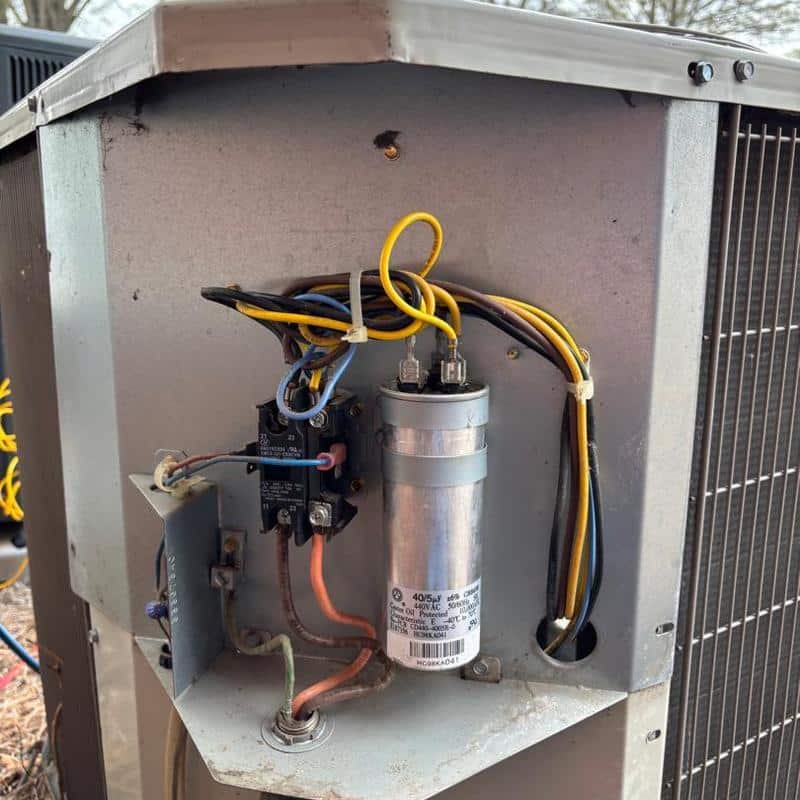
When your thermostat calls for cool air, it sends a signal to the outdoor unit. That signal energises something called a contactor. Think of it like a heavy-duty switch. When it closes, power flows to the compressor and the condenser fan motor. The click you hear? That’s the contactor closing.
At the same time, a capacitor gives the compressor and fan motors a jolt of energy to get them spinning. Without that jolt, the motor just hums and overheats. It can’t start on its own.
So one click is normal. It’s the sound of everything lining up. But when the capacitor is weak or the contactor is worn out, the system tries to start, fails, and tries again. That’s when you get the rapid clicking. The contactor is chattering; opening and closing over and over because it can’t hold a steady connection.
When Is Clicking Normal and When Should You Worry?

Not every click is bad. Here’s how to tell the difference.
|
What You Hear |
What It Means |
What to Do |
|
One click before startup |
Normal. The relay or contactor is engaging. |
Nothing. It’s working as designed. |
|
One click at shutdown |
Normal. The contactor is disengaging. |
Nothing. |
|
Rapid clicking, system starts |
Might be a loose connection or thermostat issue. |
Keep an eye on it. If it gets worse, call someone. |
|
Rapid clicking, system doesn’t start |
Failed capacitor, worn contactor, or stuck relay. |
Shut it off and call for repair. |
|
Single loud click, then nothing |
Seized compressor or failed start capacitor. |
Shut it off and call a pro. Don’t keep resetting the breaker. |
|
Clicking plus burning smell |
Electrical short. Fire risk. |
Shut off power at the breaker and call someone right away. |
That last one is the one to take seriously. If you smell burning alongside the clicking, don’t wait. Turn the system off at the thermostat, then at the breaker, and call someone. Electrical shorts are a fire risk. No AC repair is worth that.
What Are the Most Common Electrical Causes of Clicking?
A Failing Capacitor
This is the number one cause of rapid clicking that stops the system from starting. The capacitor stores energy to give the compressor and fan motors a boost. When it weakens, the motor can’t start. The system clicks, tries again, clicks, tries again. It’s a relatively cheap part, but it has to be discharged and replaced safely. Capacitors hold a lethal charge even after the power is off.
A Worn or Chattering Contactor
The contactor is the switch that sends power to the outdoor unit. When the contacts inside get pitted or burnt, it can’t hold a steady connection. It chatters, rapid clicking and the system struggles to run. A contactor replacement is a straightforward job for a technician, but it’s not something to tackle yourself. The electrical panel holds live voltage.
A Stuck or Failing relay
The relay on your control board or in your thermostat can stick. If it’s the thermostat relay, you might just need new batteries or a new thermostat. If it’s the relay on the control board, that’s a technician job.
A Failing Thermostat
Sometimes the click is coming from the thermostat itself, not the outdoor unit. Low batteries or a faulty thermostat can cause short cycling and repeated clicking. Try fresh batteries first. If that doesn’t fix it, the thermostat might need replacing.
Can You Fix This Yourself or Do You Need a Pro?
There’s a bit you can check yourself. Safe stuff. Quick stuff. It might save you a callout.
Check the filter. If it’s clogged, air can’t get through. The system overheats and shuts down. You’ll hear clicking when it tries to restart. Swap the filter if it’s dirty. It’s the cheapest thing you’ll ever do for your AC.
Have a look at the outdoor unit. Sticks, leaves, loose screws. Any of that can hit the fan blades and make a metallic clicking noise. Turn the power off at the outdoor disconnect first. Then look inside and pull out anything you can safely reach.
Chuck some new batteries in the thermostat. If the clicking is coming from the wall unit itself, dead batteries could be the whole problem. Cheap fix. Worth trying.
Reset the breaker. Once. If it tripped, reset it one time. If it trips again straight away, stop. Don’t keep flicking it. You’ll wreck the compressor.
What you should never do. Don’t open the outdoor unit’s electrical panel. Don’t test or replace the capacitor. Don’t touch the contactor or any of the wiring. That’s pro-only work. Capacitors hold a lethal charge even after the power’s off. The contactor carries live voltage. This isn’t a DIY job and it’s not worth the risk.
FAQs
How long does a capacitor usually last?
Most capacitors last somewhere between 5 and 10 years. In hot climates like Texas, they often go sooner. The heat wears them down faster. If your unit is over 7 years old and you’re hearing clicking, the capacitor is a prime suspect. It’s also one of the cheapest parts to replace, so don’t stress about the cost.
Do contactors fail more in summer?
Yes. Summer is when your AC runs the hardest, and that’s when the contactor does the most work. All that opening and closing wears down the metal contacts inside. Pitting and burning build up over time. That’s when it starts chattering. It’s one of the most common summer repair calls for any HVAC company.
Can I just buy the parts and have someone install them?
Technically, yes. But most HVAC techs won’t install customer-supplied parts. And there’s a good reason. If the part fails, you’ve got no warranty on the repair. You’ll also pay full labour either way. The savings are usually tiny and the risk isn’t worth it. Let the tech supply the part. That way it’s covered.
Does this problem happen more in older units?
Not always. Age plays a part, sure. But even newer units can have a bad capacitor from the factory or a contactor that’s installed with loose connections. The clicking isn’t really about age. It’s about whether the electrical components are working properly. A 3-year-old unit with a bad capacitor will click just as loud as a 15-year-old one.
What happens if I just ignore the clicking?
It gets worse. The system keeps trying to start, keeps failing, keeps overheating the compressor windings. Eventually the compressor seizes. When that happens, you’re not looking at a repair. You’re looking at a full system replacement. That’s thousands of dollars instead of a few hundred. Don’t ignore it.
Is it worth fixing an old AC that's clicking?
Depends on the age and the diagnosis. If the unit is under 10 years old and the problem is just a capacitor or contactor, fix it. Those are cheap repairs that’ll get you years more out of the system. If the unit is 15 years old and the compressor is seized, put the money towards a new system. A good tech will tell you straight which side of the line you’re on.
Final Thought
One click when your AC starts up? That’s normal. Rapid clicking that stops it from starting? That’s your system waving a red flag. Get it looked at. The earlier you catch it, the cheaper it is to fix.
We’re Lockey Heating & Air. We’ve been looking after systems across Temple, Killeen, Belton, Harker Heights, and Waco for years. Our team has over 80 years of combined experience. We’ll figure out what’s clicking and get it sorted properly.
If your AC is clicking and won’t start, give us a call.
The Importance of Regular HVAC Maintenance
The Importance of Regular HVAC MaintenanceLet's talk about something that's often the unsung hero...
Why You Should Consider Installing AC in Your Home
Why You Should Consider Installing AC in Your HomeWe often think of air conditioning as a fancy...
What is a Ductless HVAC System?
What is a Ductless HVAC System?What is a Ductless HVAC System? Exploring the Benefits of a...
What are the Signs that My HVAC System Needs Repair or Replacement?
What are the Signs that My HVAC System Needs Repair or Replacement?Your HVAC (Heating,...
How to Install an AC in Your Home
How to Install an AC in Your HomeStay Cool This Summer: How to Install an AC in Your Home Summer...
